

Eyes Blurry in Morning: Tips for Clearer Vision

Your day may also start frustratingly if you wake up with blurry vision. You splash cold water on your face, rub your eyelids, or blink fast. For many people, the problem is temporary.

Morning vision problems happen to people of all ages. For many individuals, temporary fog clears up rapidly after a few blinks. Others find impaired vision to be a regular inconvenience that interferes with their morning activities.

To protect your eye health, you must understand what causes this blurry vision after sleep. Common adjustments to your daily routine can quickly bring sharp clarity back. Here are some of the most typical causes of morning blurriness along with solutions for better vision throughout the day.

Why Are My Eyes Blurry When I Wake Up

Your eyelids remain closed for many hours when you sleep. The eyelids limit the flow of oxygen to your cornea, which leaves a bit of fluid in your eye overnight. This temporary buildup of fluid messes with the smooth outer curve of your cornea and causes cloudy vision in the morning.

In addition, tear production is greatly reduced during sleep. Reduced tear flow from dry eyes can result in a buildup of mucus, small particles, and dried oil on the surface of the eyes.

This accumulation of dirt disrupts incoming light rays when you open your eyes. The restoration of a smooth tear film in your eyes takes a few minutes. Blinking frequently helps disperse new, nourishing fluid throughout your eyes and clear dirt from your corneas.

Why Are My Eyes So Blurry In The Morning

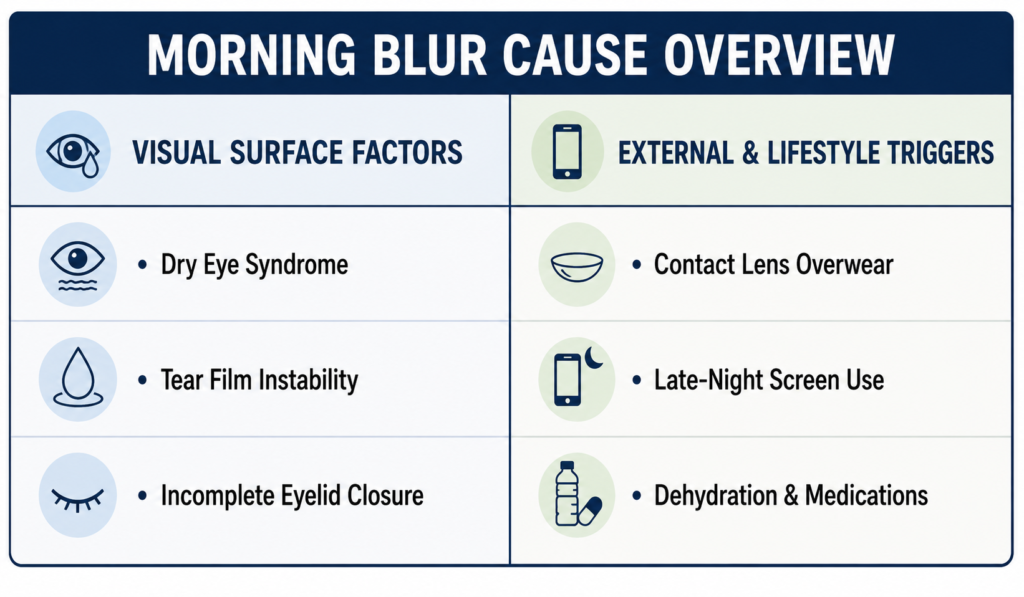
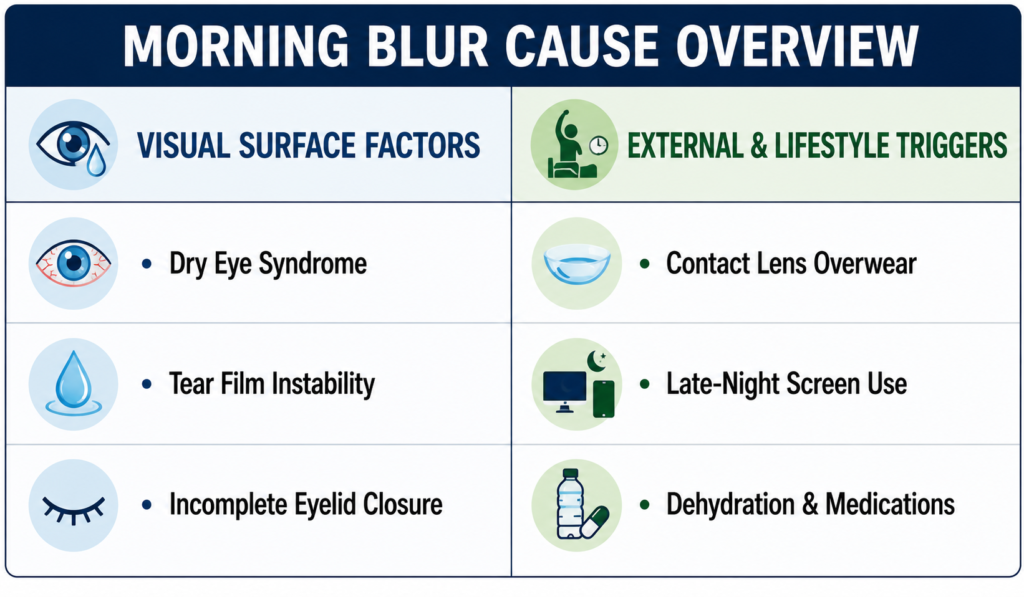
There are several different environmental, physical and lifestyle causes of hazy sight in the morning. When you know the main issue, you can act immediately in an effective way. (design from designer)
Eyes Blurry in Morning

Dry Eye Syndrome

Your tear glands cannot produce enough moisturizing fluid when you have chronic dry eye. Overnight, affected eyes become extremely dry, resulting in rough surface patches that cause impaired vision.

Tear Film Instability

A uniform distribution of water, oil, and mucus characterizes a healthy tear film. When oil glands are blocked, tears dry quickly, and light refracts unevenly when you wake up.

Contact Lens Overwear

Your cornea has a harder time getting oxygen if you wear contact lenses all night. By morning, the eyes are inflamed, puffy, and cloudy due to lenses absorbing moisture from the air.

Allergies and Irritants

Pollen from the air, dust mites, and pet dander can all be readily collected by bed sheets. Sticky mucus accumulation and blurry vision in the morning are caused by these microscopic irritants that cause inflammation over the night.

Medications

Antihistamines, blood pressure medications, and sleep medicines decrease the amount of fluid your body produces. Since tear production is reduced, dry eyes in the morning are a direct consequence.

Dehydration

Drinking water all day deprives your body of vital fluids. Tears might get thick and sticky when you’re dehydrated, which makes it harder to see clearly when you wake up.

Screen Use Before Bed

Late-night phone or tablet viewing can decrease natural blink rates. You blink less before you close your eyes for sleep, causing eye surfaces to dry out.

Incomplete Eyelid Closure

Some people sleep with their eyes partially open. A condition known as nocturnal lagophthalmos causes the cornea to be particularly vulnerable to the airflow from bedroom air throughout the night.

Simple Tips for Clearer Morning Vision

Better sleep habits help maintain your tear film during sleep. These are some easy daily tips to help you prevent haze and protect your eyes blurry in the morning, and they will not affect your mornings. (design from designer)
Eyes Blurry in Morning

Hydrate Well

Drink lots of fresh water during the afternoon and evening. Good fluid balance keeps tears healthy during sleep.

Use Lubricating Eye Drops

Use artificial tears or thick lubricating eye gels just before sleep. These products provide a barrier for the cornea and do not allow it to become extremely dry during the night.

Avoid Sleeping in Contact Lenses

At the end of the day, always remove your contact lenses. Your corneas can breathe more easily at night if you wear glasses.

Adjust Bedroom Air

Use overhead fans on low and direct vents away from the bed. Use a cool-mist humidifier to provide pleasant humidity for dry indoor air.

Change Sleep Position

Lying directly on your face puts pressure on eyelids against pillows. Do not lie directly on your back or side to avoid putting extra pressure on your eyes.

Clean Eyelids Gently

Take off your eyes’ regular oils, grime, and makeup before you go to bed. Use warm compresses or specific eyelid cleaners to clear the oil-producing glands on your eyelids.

Limit Screens Before Bed

Turn off phones and computers one hour before bedtime. Screen breaks let your natural blink rate return before sleep.

Wash Bedding Regularly

Wash pillowcases and sheets every week in hot water. Wash bedding regularly to remove dust mites and pet allergy that can lead to inflammation during the night.

When Morning Blur Signals a Need for Professional Care

When blurry vision occurs in the morning, it usually goes away quickly with modest treatment. However, an assessment by an ophthalmologist or optometrist is necessary for abrupt or permanent changes in vision.

SymptomTypical CauseRequired Action
Temporary fogginess clearing in minutesMild dryness or tear buildupPractice basic eye hygiene and hydration
Blur lingering for hours or all daySevere dry eye or corneal swellingSchedule an eye exam within a week
Sudden haze with eye pain or rednessInfection or acute eye pressureSeek immediate urgent eye care
Visual haze paired with flashers or floatersRetinal concernsContact an eye specialist immediately

Practical Morning Routine for Clearer Vision

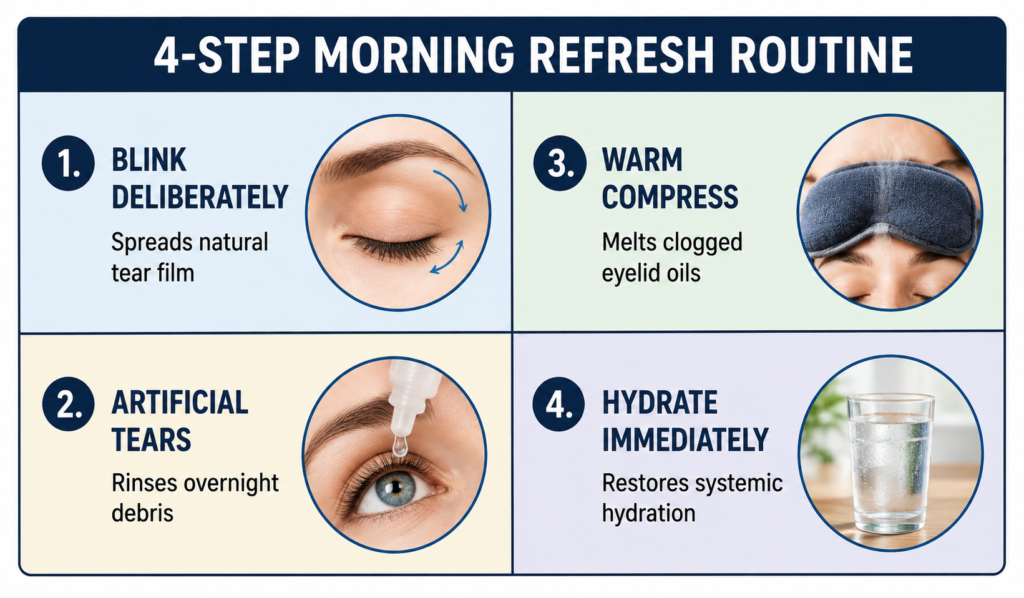
A well organized morning routine is used to remove overnight haze safely. Follow these gentle steps immediately after waking to refresh your eyes:

  1. Blink Deliberately: Blink several times firmly to distribute fresh tears across your corneas naturally.
  2. Use Preservative-Free Drops: Use one drop of artificial tears in each eye to remove overnight sticky debris.
  3. Apply a Warm Compress: Place a clean, warm cloth over closed eyelids for two minutes to melt clogged eyelid oils. 
  4. Drink Fresh Water: Drink a full glass of water immediately after waking to hydrate the body. (design from designer)
Eyes Blurry

The following brief checklist clears the visual fog in minutes.

Conclusion

Blurry vision in the morning is a common problem, but it shouldn’t ruin your mornings. The majority of cases are linked to everyday activities, including using screens late at night, environmental conditions, or minor eye dryness.

Making minor lifestyle adjustments can enhance eye health. It helps to use lubricating drops, drink extra water, and maintain clean bedding.

Your day may also start frustratingly if you wake up with blurry vision. You splash cold water on your face, rub your eyelids, or blink fast. For many people, the problem is temporary.

Morning vision problems happen to people of all ages. For many individuals, temporary fog clears up rapidly after a few blinks. Others find impaired vision to be a regular inconvenience that interferes with their morning activities.

To protect your eye health, you must understand what causes this blurry vision after sleep. Common adjustments to your daily routine can quickly bring sharp clarity back. Here are some of the most typical causes of morning blurriness along with solutions for better vision throughout the day.

Why Are My Eyes Blurry When I Wake Up

Your eyelids remain closed for many hours when you sleep. The eyelids limit the flow of oxygen to your cornea, which leaves a bit of fluid in your eye overnight. This temporary buildup of fluid messes with the smooth outer curve of your cornea and causes cloudy vision in the morning.

In addition, tear production is greatly reduced during sleep. Reduced tear flow from dry eyes can result in a buildup of mucus, small particles, and dried oil on the surface of the eyes.

This accumulation of dirt disrupts incoming light rays when you open your eyes. The restoration of a smooth tear film in your eyes takes a few minutes. Blinking frequently helps disperse new, nourishing fluid throughout your eyes and clear dirt from your corneas.

Why Are My Eyes So Blurry In The Morning

There are several different environmental, physical and lifestyle causes of hazy sight in the morning. When you know the main issue, you can act immediately in an effective way. (design from designer)

Eyes Blurry in Morning

Dry Eye Syndrome

Your tear glands cannot produce enough moisturizing fluid when you have chronic dry eye. Overnight, affected eyes become extremely dry, resulting in rough surface patches that cause impaired vision.

Tear Film Instability

A uniform distribution of water, oil, and mucus characterizes a healthy tear film. When oil glands are blocked, tears dry quickly, and light refracts unevenly when you wake up.

Contact Lens Overwear

Your cornea has a harder time getting oxygen if you wear contact lenses all night. By morning, the eyes are inflamed, puffy, and cloudy due to lenses absorbing moisture from the air.

Allergies and Irritants

Pollen from the air, dust mites, and pet dander can all be readily collected by bed sheets. Sticky mucus accumulation and blurry vision in the morning are caused by these microscopic irritants that cause inflammation over the night.

Medications

Antihistamines, blood pressure medications, and sleep medicines decrease the amount of fluid your body produces. Since tear production is reduced, dry eyes in the morning are a direct consequence.

Dehydration

Drinking water all day deprives your body of vital fluids. Tears might get thick and sticky when you’re dehydrated, which makes it harder to see clearly when you wake up.

Screen Use Before Bed

Late-night phone or tablet viewing can decrease natural blink rates. You blink less before you close your eyes for sleep, causing eye surfaces to dry out.

Incomplete Eyelid Closure

Some people sleep with their eyes partially open. A condition known as nocturnal lagophthalmos causes the cornea to be particularly vulnerable to the airflow from bedroom air throughout the night.

Simple Tips for Clearer Morning Vision

Better sleep habits help maintain your tear film during sleep. These are some easy daily tips to help you prevent haze and protect your eyes blurry in the morning, and they will not affect your mornings. (design from designer)

Eyes Blurry in Morning

Hydrate Well

Drink lots of fresh water during the afternoon and evening. Good fluid balance keeps tears healthy during sleep.

Use Lubricating Eye Drops

Use artificial tears or thick lubricating eye gels just before sleep. These products provide a barrier for the cornea and do not allow it to become extremely dry during the night.

Avoid Sleeping in Contact Lenses

At the end of the day, always remove your contact lenses. Your corneas can breathe more easily at night if you wear glasses.

Adjust Bedroom Air

Use overhead fans on low and direct vents away from the bed. Use a cool-mist humidifier to provide pleasant humidity for dry indoor air.

Change Sleep Position

Lying directly on your face puts pressure on eyelids against pillows. Do not lie directly on your back or side to avoid putting extra pressure on your eyes.

Clean Eyelids Gently

Take off your eyes’ regular oils, grime, and makeup before you go to bed. Use warm compresses or specific eyelid cleaners to clear the oil-producing glands on your eyelids.

Limit Screens Before Bed

Turn off phones and computers one hour before bedtime. Screen breaks let your natural blink rate return before sleep.

Wash Bedding Regularly

Wash pillowcases and sheets every week in hot water. Wash bedding regularly to remove dust mites and pet allergy that can lead to inflammation during the night.

When Morning Blur Signals a Need for Professional Care

When blurry vision occurs in the morning, it usually goes away quickly with modest treatment. However, an assessment by an ophthalmologist or optometrist is necessary for abrupt or permanent changes in vision.

SymptomTypical CauseRequired Action
Temporary fogginess clearing in minutesMild dryness or tear buildupPractice basic eye hygiene and hydration
Blur lingering for hours or all daySevere dry eye or corneal swellingSchedule an eye exam within a week
Sudden haze with eye pain or rednessInfection or acute eye pressureSeek immediate urgent eye care
Visual haze paired with flashers or floatersRetinal concernsContact an eye specialist immediately

Practical Morning Routine for Clearer Vision

A well organized morning routine is used to remove overnight haze safely. Follow these gentle steps immediately after waking to refresh your eyes:

  1. Blink Deliberately: Blink several times firmly to distribute fresh tears across your corneas naturally.
  2. Use Preservative-Free Drops: Use one drop of artificial tears in each eye to remove overnight sticky debris.
  3. Apply a Warm Compress: Place a clean, warm cloth over closed eyelids for two minutes to melt clogged eyelid oils. 
  4. Drink Fresh Water: Drink a full glass of water immediately after waking to hydrate the body. (design from designer)
Eyes Blurry

The following brief checklist clears the visual fog in minutes.

Conclusion

Blurry vision in the morning is a common problem, but it shouldn’t ruin your mornings. The majority of cases are linked to everyday activities, including using screens late at night, environmental conditions, or minor eye dryness.

Making minor lifestyle adjustments can enhance eye health. It helps to use lubricating drops, drink extra water, and maintain clean bedding.

More from author

LEAVE A REPLY

Please enter your comment!
Please enter your name here

Related posts

Advertismentspot_img

Latest posts

How to Keep Your Eyes Healthy Without Expensive Treatments

Many people think you need to use an expensive therapy or you need to use high end treatments to maintain clear vision. They believe...

How to Improve Eye Sight While Using Screens Daily

Digital screens increasingly dominate almost every part of our professional lives. Without a second thought, we move from PCs to cellphones. This constant close-up...

10 Best Smart Safety Glasses for Modern Workplaces

Our daily work tools have changed over the last decade. We use tablets, automated machines, and cloud software to keep factories and job sites...

Want to stay up to date with the latest news?

We would love to hear from you! Please fill in your details and we will stay in touch. It's that simple!